09
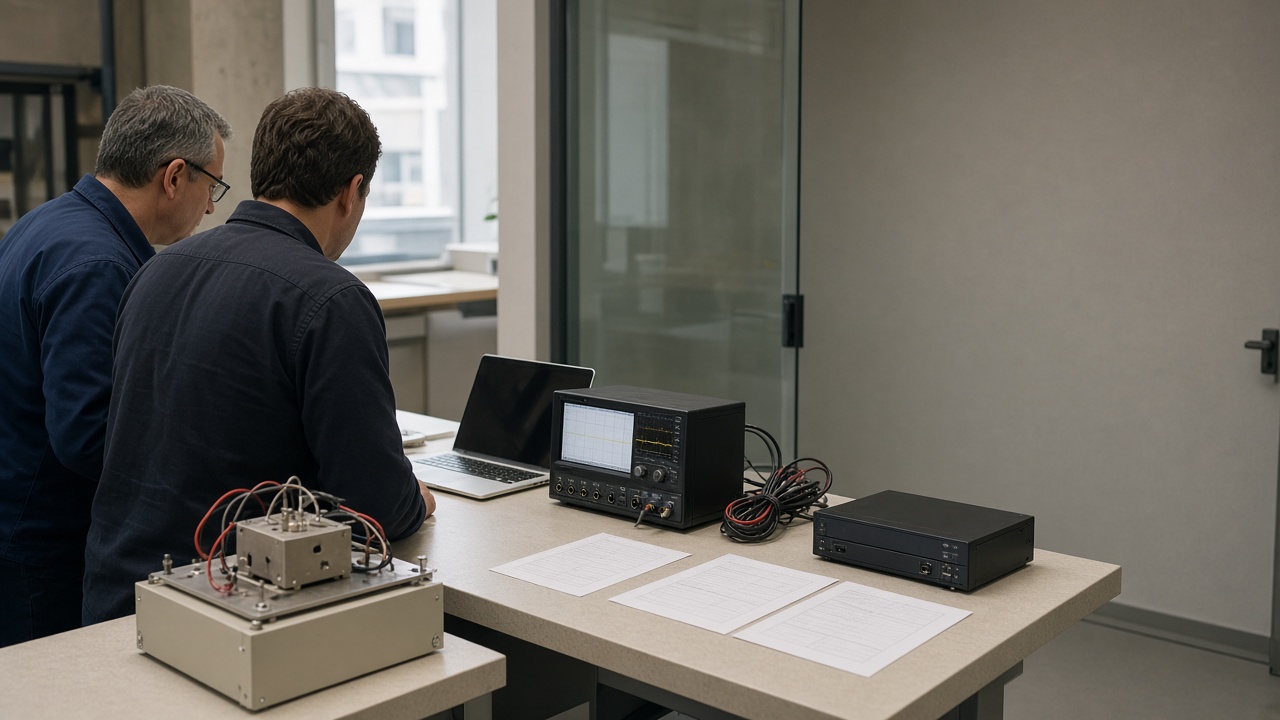
Assessment covers code quality, architectural soundness, automated-test completeness, performance and security baselines, and release-process maturity, producing reviewable reports. Dedicated AI assessment runs models and agents through identical client-derived tasks, scored on four dimensions — quality, speed, cost and failure rate — with original evidence retained throughout. All of our own production systems run under this same standard, with hundreds of automated tests per pipeline as the gating norm. Applicable to outsourced-delivery acceptance, technical due diligence, vendor selection and quality-system build-out.
Scope & acceptance +
- What you receive
- Assessment scope and methods, business test sets, reproducible scripts, raw results, findings, risk ratings and improvement reports.
- How we validate delivery
- Rerun key tests in the agreed environment and trace report conclusions to test cases, execution conditions and original evidence.
- Quality gates can be implemented from the assessment; test counts follow business risk.
- Pipeline gate and assessment report samples are available.
10
We review the identity, gateway, data, storage and observability layers against business constraints, comparing mainstream open-source and commercial options item by item on integration, licensing, cost and maintenance, and defining trade-offs, migration order and rollback paths; risks that need proof are resolved through scoped PoCs. Zitadel, Iceberg, Trino and K3s in our own stack are products of this method, all running in production. We deliver the complete review, from candidate comparison and assessment reports through a phased evolution roadmap.
Scope & acceptance +
- What you receive
- Current-state and constraint inventories, candidate comparisons, fit and cost analysis, architecture review, validation results and a phased roadmap.
- How we validate delivery
- Trace each recommendation to client constraints, comparison evidence and trade-offs; resolve agreed validation risks through a scoped proof of concept or test.
- Plan migration order and rollback from the current system, with adoption criteria, alternatives and future review points.
- Candidates are reassessed for each project.
11
We support clients through the technical side of sourcing software and AI projects: turn business goals into scope and milestones that vendors can price and clients can accept, prepare technical requirements and evaluation criteria, assist with vendor inquiries and comparison, then review deliverables, risks and changes at each milestone and coordinate technical acceptance. The client retains procurement, vendor selection, contracting and payment decisions; we provide technical assessment and delivery oversight.
Scope & acceptance +
- What you receive
- Requirements and scope, a technical request for proposal, acceptance criteria, vendor comparison records, milestone and risk logs, stage reviews and a final technical acceptance report.
- How we validate delivery
- Trace original requirements through the request, vendor proposals, milestone deliverables and test evidence. Check each stage and final handover against agreed criteria, recording open issues and their owners.
- Engage us for technical scoping, vendor assessment or delivery oversight as separate stages.
- The client and its appointed advisers own procurement procedures, legal contract terms and commercial decisions. Access to and disclosure of project materials follow the agreed authorization.
12
Maintenance covers testing, releases, rollback, backup and recovery, fault diagnosis and security upgrades. The operating record is verifiable: backup recovery proven through real drills, CVE responses and upgrades on record, institutionalized incident reviews on file, and full-stack observability across metrics, logs and traces supporting rapid diagnosis. Service term, response times and recovery objectives (RTO / RPO) are written into the contract item by item.
Scope & acceptance +
- What you receive
- Maintenance plans, release and rollback records, backup and recovery reports, monitoring and alert configuration, incident reviews, security-update records and periodic service reports.
- How we validate delivery
- Review service records and response times against the contract, validate RTO / RPO through recovery drills, and check upgrades and issue resolution.
- Agree service hours, incident severity, response time, recovery objectives, backup retention and responsibilities.
- The SLA is defined for the maintained system and contract.
13
Three stages, each independently delivered and decided: the prototype stage delivers an operable demonstration (week-scale), the validation stage delivers real-user trials with data feedback, and the production stage delivers a production-grade system. The client can cut losses or double down at every decision point, holding assessable results before expanding investment. This method has incubated 50+ numbered internal projects, more than ten of which have grown into live production systems.
Scope & acceptance +
- What you receive
- Prototype: an interactive demonstration. Validation: real-user trials and findings. Production: the operating system, deployment assets and documentation.
- How we validate delivery
- Agree goals, timing, budget and acceptance before each stage. Deliver artifacts and evidence at each review so the client can continue, change direction or stop.
- Prototype timing depends on scope, dependencies and available inputs. The production stage adds permissions, persistence, monitoring, deployment and operating requirements.
- Stage examples are shared with their maturity clearly identified.